Tampilkan postingan dengan label Business. Tampilkan semua postingan

Sabtu, 17 Juni 2017

JOB INTERVIEW

A job interview is a one-on-one interview consisting of a conversation between a job applicant and a representative of an employer which is conducted to assess whether the applicant should be hired. Interviews are one of the most popularly used devices for employee selection. Potential job interview opportunities also include networking events and career fairs.

A job interview typically precedes the hiring decision. Besides, the job interview is considered one of the most useful tools for evaluating potential employees.
The interview is usually preceded by the evaluation of submitted resumes from interested candidates, possibly by examining job applications or reading many resumes. Next, after this screening, a small number of candidates for interviews is selected (https://en.wikipedia.org/wiki/Job_interview).


There are several types of questions interviewers ask applicants. The type of questions asked can affect applicant reactions. Some of the common questions on the mind of the hiring manager include:
1. Tell me about yourself.
2. Do you have any health problem? Have you ever been hospitalized?
3. What do you think are your greatest strengths and weaknesses?
4. How would describe your personality?
5. Have you ever been working under stress?
6. When did you last lose your temper? Describe what happened.
7. Do you regard yourself as an ambitious person?
8. What is more important to you: status or money?
9. What excites you about the job you are doing now?
10. What worries you about the job you are doing now?
11. What makes you think that you would enjoy working for us?
12. How long do you think you'd stay with us if you were appointed?
13. How do you like your present job?
14. What are your most proud of having done in your present job?
15. What was the worst problem you have had in your present job?
16. Why do you want to leave your present job?
17. What do you think an ideal boss is like?
18. How often were you absent from your previous job?
19. Why should we hire you instead of one of the other candidates?
20. What sort of salary are you looking for?

However, in many countries laws are put into place to prevent organizations from engaging in discriminatory practices against protected classes when selecting individuals for jobs. In the United States, it is unlawful for private employers with 15 or more employees along with state and local government employers to discriminate against applicants based on the following: race, color, sex (including pregnancy), national origin, age (40 or over), disability, or genetic information (note: additional classes may be protected depending on state or local law). More specifically, an employer cannot legally "fail or refuse to hire or to discharge any individual, or otherwise discriminate against any individual with respect to his compensation, terms, conditions, or privilege of employment" or "to limit, segregate, or classify his employees or applicants for employment in any way which would deprive or tend to deprive any individual of employment opportunities or otherwise adversely affect his status as an employee" (https://en.wikipedia.org/wiki/Job_interview).

Given these laws, organizations are limited in the types of questions they legally are allowed to ask applicants in a job interview. Asking these questions may cause discrimination against protected classes. For example, in the majority of situations it is illegal to ask the following questions in an interview as a condition of employment:
1. Do you have any physical or mental disabilities?
Such question is illegal because it is unlawful for an employer to discriminate against a qualified applicant or employee with disability.
2. When are you planning to have children?
This question classified into illegal question because sex is a federally protected class, which means an employer cannot discriminate against a male or female job applicant.
3. Will you need time off for religious holidays?
Religious discrimination is strictly prohibited. That is why such question is illegal to be asked in an interview. Employers are not allowed to make hiring decisions based on a person's religious beliefs, observances, or practices.
4. What is your nationality?
This is an illegal question because national origin is a federally protected class. Consequently, employers cannot base hiring decision on whether an applicant is from a different country or of a specific ethnicity.
5. What is your political affiliation?
Political affiliation is a personal preference and is a private thing. Everyone have freedom to choose what party they are supporting. That is why employers should not discriminate applicants against their political affiliation.

Then, how to answer those questions?
When an interviewee is asked illegal questions by the employer, He or She is always have the option to refuse to answer the question or to answer the question politely. For example, when a question about physical or mental disabilities comes out, you can answer such question by saying that you are confident that you will be able to handle the requirements of this position.
Also, when you are asked such what is your nationality, what is your political affiliation, when are you planning to have children, or will you need time off for religious holiday, you can answer by saying that you are confident that those things (nationality, political affiliation, children, and religious beliefs) will not interfere with your ability to do your job.


General questions are viewed more positively than situational or behavioral questions and 'illegal' interview questions may be perceived as negative being perceived unrelated to the job, unfair, or unclear how to answer. Using questions that discriminating unfairly in law unsurprisingly are viewed negatively with applicants less likely to accept a job offer, or to recommend the organization to others.


SOFTSKILL GROUP ASSIGNMENT #8
Asri, Ismadanti, Margaretha, Rahmaluttifah, Stacia, and Talitha
3SA01

Sabtu, 13 Mei 2017

NEGOTIATION


What is Negotiation?
Negotiation is a method people use to settle differences. In order to avoid argument and dispute, negotiation is needed to reach the agreement. There will be a negotiation process when each related people have different opinions, here, negotiation will play an important role to find out the best solutions of all.

What are the Negotiation Styles?

1.     Avoiding
This negotiation style is concerned with avoiding intra-personal conflict. It is characterized by sidestepping, postponing, and ignoring the issue or situation. This style of negotiation will be useful when the stakes of a negotiated outcome are not worth the investment of time or the potential for igniting conflict
2.     Accommodating
This negotiation style is concerned with the relationship between the parties. In this style of negotiation, the other side will be easily given concessions in hopes of strengthening the relationship, also will be very thoughtful to the other side which make them to be neglected their own needs, this is because they want to help the other side to get what they want
3.     Compromising
This style is in between accommodating and competing. It will be very useful to use this style when time is a concern or there is a strong relationship between the parties. In order to reach an agreement, this style need concessions from both sides. “Meet in the middle” or “Split the difference” solutions are used in this style.
4.     Collaborating
This style focuses on using problem solving methods to create value and discover mutually satisfactory agreements. Utilizes the creativity of both parties to find solutions to both sides’ interests. This style teds to be assertive about their need and cooperative with the other side.
5.     Competing
This style concerned with achieving their own goals regardless of the impact on others. This style is when one side wants to win the negotiation and the winning will make the think superior than the other side. Negotiation is viewed as a win or lose competition rather than a problem solving activity. In order to achieve their objectives, manipulative tactics such as attacks and threats are often used in this negotiation style.

Negotiation Process
In order to achieve a successful negotiation, a certain approach to negotiation is needed. The negotiation process includes the following steps:
1.     Preparation
The first step is to prepare everything that is needed to do the negotiation. This involves making sure all the pertinent facts of the situation are known in order to clarify your own position. Furthermore, before the negotiation is held, a decision needs to be taken as to when and where a meeting will take place to discuss the problem and who will attend.
2.     Discussion
During the discussion, the representatives of each side pouring their understanding of the situation and discuss it together. It will be helpful to take notes during the discussion or record the whole discussion just in case a clarification will needed in the future.  
3.     Clarifying goals
Each sides must clarify their goals. From the discussion, the goals, interests, and viewpoint of both sides need to be clarified thus future misunderstanding can be avoided. It is helpful to make a list of these things (goals, interests, and viewpoints) in order of priority. This clarification is a way to identify or establish some common ground.
4.     Negotiate Towards a Win-Win Outcome
This stage focuses on seeking for the most comfortable solutions both sides, or win-win outcomes, where both side feel they have gained positive things from this whole negotiation process. Win-win outcome is usually the best result of negotiation. Win-win outcome will be achieved if each of the point of view of both side has been taken into consideration.
5.     Agreement
Agreement can be achieved once all the things that is being negotiate has been cleared and both side feel satisfied with the outcomes. It is essential for everybody involved to keep an open mind in order to achieve an acceptable solution.
6.     Implementing a Course of Action
Based on the agreement, a course of action has to be implemented to carry through the decisions.

What are the Characteristics of Negotiation?
The characteristics of a negotiation are:

1.      There are minimum of two parties involved in a negotiation
2.      Nearly always in the form of face-to-face use of spoken language, gestures and facial expressions.
3.      Negotiation usually concerns things in the future that will come or has not happened and the negotiator wants to happen. Both parties have their own goals that they wish to achieve through the negotiation
4.      There is a clash of goals, that is, some of the goals are not shared by both parties
5.      There is an expectation of outcome by both parties in negotiation
6.      Both parties believe the outcome of the negotiation to be satisfactory
7.      Both parties are willing to compromise
8.      Both parties understand the purpose of the negotiation
9.      The end of the negotiation is the agreement taken by both parties, although the agreement is for example both parties agree to disagree.

Effect on Negotiation
A.     Positive effect
ü  In procedural terms, negotiation is probably the most flexible form of dispute resolution as it involves only those parties with an interest in the matter and their representatives. Like any method of dispute resolution, negotiation cannot guarantee that a party will be successful. However, many commentators feel that negotiations have a greater possibility of a successful outcome.
ü  The advantages of negotiation are that it limits the number of players to those involved in the dispute. This allows for a focused approach to problem solving.
ü  Assuming that the parties are negotiating in good faith, negotiation will provide the parties with the opportunity to design an agreement which reflects their interests.
ü  Negotiations may preserve and in some cases even enhance the relationship between the parties once an agreement has been reached between them.

B.     Negative effect
û  A particular negotiation may have a successful outcome. However, parties may be of unequal power and the weaker party (ies) may be placed at a disadvantage.
û  Where a party with an interest in the matter in dispute is excluded or inadequately represented in the negotiations, the agreement's value is diminished, thereby making it subject to future challenge.
û  No party can be compelled to continue negotiating. Anyone who chooses to terminate negotiations may do so at any time in the process, notwithstanding the time, effort and money that may have been invested by the other party or parties.
û  The negotiation process cannot guarantee the good faith or trustworthiness of any of the parties.
û  During the negotiations, in conveying the intentions sometimes there are any arguing with emotion that make the other party angry. Thus, it can lead to split both sides, damage business relationships and, be difficult to negotiate and make a deal in the future.


SOFTSKILL GROUP ASSIGNMENT #6
Asri, Ismadanti, Margaretha, Rahmaluttifah, Stacia, and Talitha
3SA01

Rabu, 03 Mei 2017

COMMUNICATION NOWADAYS

SOFTSKILL ASSIGNMENT #5 (Individual)


HOW TECHNOLOGY AFFECTS COMMUNICATION POSITIVELY & NEGATIVELY?


Communication is a process by which information is exchanged between individuals through a common system of symbols, signs, or behavior (https://www.merriam-webster.com/). We can communicate with people directly or indirectly. When we want to deliver information directly, we can meet them and speak our thought face-to-face.  Meanwhile, when we want to deliver information indirectly, because of some reasons, we can communicate through words to explain our ideas. Nowadays, we can communicate to other people in easy way like using communication technology. 

Communication technology is a media which uses the technology for communication.  It has revolutionized the way people communicate. Besides, it also has improved our lifestyles and changed the face of the entire communication process in today’s world. As in yin and yang that shows everything in life always have two sides, there are positive and negative impacts of communication technology:

A.   POSITIVE IMPACT

1.     Most of the business depend on technology for communication. It because communication technology has many benefits to organization such as: (1) cost saving by using instant messenger instead of normal telephone, (2) cost saving for paper by using email instead of letter, (3) video conferencing instead of travelling to meetings, (4) e-commerce web can access to larger, even worldwide market, instead of sales catalogues, and (5) Flexible response, which means organizations with good communications can respond to changes quickly such as handle customer relations and improved supply chain for goods and services.

2.     Communication technology create long distance communication become easier and faster. Gone are the days when you have to send the physicals letters and wait for days to get them delivered, or visit phone booth just to make a call to your friends. Now there is instant messaging and video calling options like email, WhatsApp and much more to deliver your message quickly. Thus, communication nowadays has no barrier.

3.     Communication technology has helped in mass communication. An email or newsletter can be sent to multiple people at the same time-saving effort and time. It is specially used in offices by increased frequency without calling a meeting requiring printing of the materials into a saving money by emails and it is also used in colleges as a mode of communication to do group homework.

4.     Communication technology make new friends, gain new interests, and build relationship. Communication strengthened relationship, so people can always keep in touch with their friends whenever and wherever they are.


B.   NEGATIVE IMPACT

1.     The cost of using communication technology may cause a number of problems for organizations.  A lot of hardware and software is expensive, both to purchase and to maintain. Besides, the system usually requires specialist staff to run it. These extra costs should be offset by the positive effects of using communication technology, but if an organization gets its cost-benefit analysis wrong it may lose money.

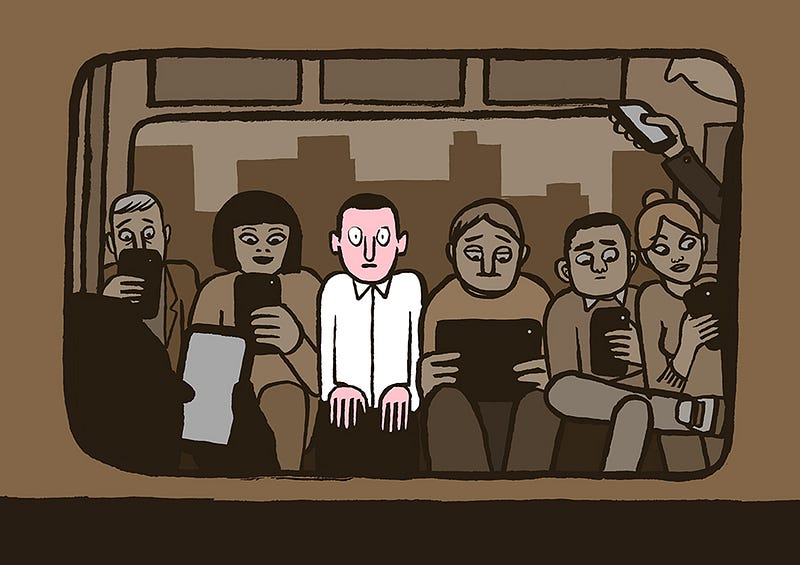
2.     Near yet far, which means although communication technology connect people who are far, however it makes people who are near become far due to the reduce of interaction. People seem busy with their gadget to communicate with people who are in other place, and they ignore or do not pay attention with someone who is talking in front of them. Therefore, technology can have risks of reducing person-to-person interaction which lead people to feel isolated and unhappy because they do not get the chance to meet and talk with other people.

3.     A misunderstanding often happen when communicating by technology. Because we express our thought using words, therefore if we do not deliver our thought with proper words or language the other people will not understand the meaning of the message itself. It also can lead to a problem due to incorrect and misleading information and ruin the relationship.

4.     Communication technology can impact on interpersonal communication. This can lead to lacks essential interpersonal skills (the ability to express the ideas and thoughts to others face-to-face). A major reason for this tendency is increased frequency of communication through texting.

In conclusion, as you can see, technology affects communication positively and negatively. The positive points of the technological elements of communication cover up the negative points. It all depends on how we use technology; use the communication technology wisely and don’t abuse the technology for malicious motives. If this happens, technology will then prove to be a complete boon to mankind!


WHY LISTENING IS SUCH A BIG CHALLENGE FOR MOST PEOPLE?

Speaking is easy; listening is difficult. Many people actually just remember a little of what they are said to them. In the course of a lifetime, so much time is spent mastering hard skills, but little time is spent polishing essential soft skills or interpersonal skills. Listening is one of them.

In everyday life, people always complaint about their job, their assignment, and speak about their life goals but they don’t want to listen other’s advice because they feel like they are Mr. / Mrs. right. Besides, many people don’t want to listen other people because of boring topic. If someone starts on a long monologue about something that is not interesting, people tend to be hard to concentrate and keep attention. Because when people talk about something that is not interesting, it takes a huge effort of concentration to process their words, focus on them and not everything else on the environment. Technology is one of the culprit in this factor. When we use social media, there is so much going on, so it’s difficult to focus on what people are saying to us, especially when the topic is not interesting. Moreover, people don’t want to listen if the topic they are talking is out of the topic. Some people feel bored when someone who talks to them, but he/she talks for a long, long time, loses what he/she was originally talking about.   

It's hard to listen. We want to do our own thing and not listen to someone talking. We used to leave conversations when people talk about something we are not into. Some people even don't hang out with other people because they don't want to hear some boring stories.

But if we are talking about ours, then we will do the same thing in return by listening to what they say. I think that is polite and I think it's selfish to expect everyone to listen to what you want to talk about, but you never do the same for them in return. I have been brainwashed into taking into consideration others' needs and feelings, and I think we should feel guilty if we are all take and no give. Though I suppose, as long as you don’t expect others to listen to you either, your attitude is fine.

Think of listening as a skill that must be mastered. Nobody is born knowing how to read and write. These essentials skills are mastered by constant practice. Similarly, listening has to be learned the same way. One way to remember what people say is to repeat back to them what they are saying, so that the thought is understood and remembered. It also can prevent misunderstanding. However, don’t expect to become a good listener overnight. It takes time, patience, concentration and hard work. You can start by slowing down. Just because everything around you is happening quickly doesn’t mean you have to follow suit.  Apply the brakes, focus and you’ll be pleasantly surprised by what you hear. In short, just remember although listening is such a big challenge, but when you listen to someone, you also appreciate other people as the way you appreciate and love yourself.


*ASRI JUL MEGITA (11614748) - 3SA01

Rabu, 26 April 2017

MEETING INVITATION LETTER 2

Depok, 26th April 2017

To:
All of Head Divisions
PT Tasty Kingdom

Subject: Company Logo Meeting


I announce you to attend the meeting in discussing our new company logo. The meeting will be held on 27th April 2017, starting from 09.00 a.m. until 11.00 a.m.  It will take place at Meeting Room 1 on the 1st floor.  Please ensure that you are on time for the meeting.

I have enclosed two additional documents which the design of our new company logo and the meeting agenda. This meeting is very important to decide our new logo based on our company vision. Therefore, your attendance will be a great help to the process of the meeting.

I look forward to see you on the meeting.  Thank you for your cooperation.


Sincerely,
idtprz
Ismadanti Putri
Manager


*Softskill Assignment:
Asri Jul Megita, Ismadanti Putri, Margaretha Agustine, Rahmaluttifah, Stacia Dara, and Talitha Rahma
3SA01

Rabu, 19 April 2017

MEETING INVITATION LETTER

Depok, 17th April 2017

To:
Head of Marketing and Finance Division
PT Tasty Kingdom

Subject: New Staff Meeting

I announce you to attend the meeting in welcoming our new staffs and discuss their jobs based on their applications and job tasks. The meeting will be held on 18th April 2017, starting from 10.00 a.m. until 12.00 a.m.  It will take place at Meeting Room 3 on the 2nd floor.  Please ensure that you are on time for the meeting.

I have enclosed two additional documents which provide some background information of our new staffs and the meeting agenda will also be sent to you shortly. This meeting is very important to make our new staffs work well in our company. Therefore, your attendance will be a great help to the process of the meeting.

I look forward to see you on the meeting.  Thank you for your cooperation.


Sincerely,
idtprz
Ismadanti Putri
Manager


*Softskill Assignment:
Asri Jul Megita, Ismadanti Putri, Margaretha Agustine, Rahmaluttifah,
Stacia Dara, and Talitha Rahma
(3SA01)

Sabtu, 25 Maret 2017

AN ANALYSIS OF BUSINESS MEETING VIDEO


Video 

Title                 : Part 2 - How to Conduct Successful Meeting
Published date : June, 30th 2014
Published by   : United Teachers
Source             : https://www.youtube.com/watch?v=1hSiQ51dhjA


Result of Analysis

This video is about United Teachers Los Angeles and The American Federation of Teachers present Part 2 in a series on "How to Conduct a Successful Meeting". This video shows how an organized meeting can achieve consensus and accomplish the goals set by the agenda.
There are many reasons why this video can be an example of a good and effective meeting. Below are the explanations:

1.      All participants already got the agenda, so they know what is going to be discussed.
2.      The leader of the meeting opens the meeting with greeting everyone and recalls the decision of the last meeting.
3.      The leader also tells the rules of the meeting so participants will pay the attention to the meeting issues which is about choosing the education technology media for student between iPad and PCs because the district open it up so that the meeting can make some changes to how they did their budget of three hundred dollars for student.
4.      Then the leader asks the participant one by one to give the opinion about the issues they have. Therefore, there is no monopoly in the meeting because all participants of the meeting have the same rights to share their opinion. Besides, when one person is telling his or her opinion, the others listen it carefully and appreciate the opinion.
5.      The leader of the meeting controls the meeting very well so the meeting run conductively.
6.      The leader gives advice or alternative idea for each opinion that the participants deliver in the meeting.
7.      The arguments based on fact and not emotional opinions.
8.      When the decision has been made, the leader asks all participants if there is anybody that could not live with the decision or are they have any other thing they want to talk.
9.      The leader close the meeting with concluding the result of the meeting.

Based on its purpose, we can conclude that the meeting is a problem solving meeting. Because, the purpose of the meeting is to solve the problems about education technology media for student. Meanwhile, based on the characteristics of a successful meeting, this meeting can be categorized as successful meeting, because the meeting is organized, focused on the topic, all participants give opinion and the decision is taken by all participants.


SOFTSKILL ASSIGNMENT 2
Discussed by: Asri, Ismadanti, Margaretha, Rahmaluttifah, Talitha, and Stacia (3SA01)


Kamis, 16 Maret 2017

BUSINESS MEETING


SOFTSKILL GROUP ASSIGNMENT
Asri, Ismadanti, Margaretha, Rahmalutiffah, Stacia, Talitha (3SA01)


A meeting is a gathering of two or more people that has been convened for the purpose of achieving a common goal through verbal interaction, such as sharing information or reaching agreement. Meetings may occur face-to-face or virtually, as mediated by communications technology, such as a telephone conference call, a Skype conference call or a video conference.
Meeting is also one of the major media of oral communication. It is essentially important for every organization. The basic objective of meeting is to take decisions on some predetermined issues. It has also some other purposes. The objectives or purposes of meeting are discussed below:
  1. To solve the problem
    An important purpose of meeting is to provide solution to organizational problems. Problems that are critical and require opinions of most of the members of a board or council must be solved by calling meeting. In meeting diverse thoughts are found that help to face problem suitably.
  2. To give information
    Meeting is arranged also to provide information to the audience about various matters of the organization. Audience also exchange information in meetings.
  3. As a democracy forum
    The participants of the meeting are expected to participate in the problems that being discussed
  4. As a good coordination media between the participants of the meeting (employees) and the organization/ company
  5. As a negotiation media
    Meeting is also called for making negotiations between the conflicting parties through fruitful discussion. Sometimes employers and employees or trade union leaders sit in meeting together to reach on some agreement so that organizational activities can be run smoothly.
  6. As a media to forming regulations


Types of meeting
1. Based on its purpose
  • Explanation meeting, a meeting that is held to give an explanation to the meeting participant. In explanation meeting, the meeting participant are not only listen the explanation from the meeting leader but also give a chance to ask question.
  • Problem solving meeting, is a meeting to solve the problem that being faced. In this meeting, the role of the audience is important to give advice or opinion. The conclusion of all the idea or opinion of the meeting is the way to solve the problem.
  • Negotiation meeting, a meeting that is held to negotiate a dispute or to find an alternative solution (win-win solution).
2. Based on its characteristics
  • Formal meeting, is a pre-planned event where two or more people come together to discuss specific matters for the purposes of achieving a specific goal. Formal meetings have a formal agenda, conducted by a chairperson, and takes place at a pre-planned place at a particular time.
  • Informal meeting, a meeting that is more casual and less planning is involved.  Informal meetings have no formal requirements, have no agenda, and can take place anywhere, such as a restaurant or a coffee shop. Usually this meeting is held to discuss the unpredictable things which have to be solve right away. Therefore the audience attend the meeting by direct invitation.
  • Open meeting, a meeting that is attend by all employees and the topic of the meeting is not confidential.
  • Closed meeting, a meeting that is attend by only certain people and the topic of the meeting is confidential.
3. Based on its periods
  • Weekly meeting, a meeting that is held once a week and it usually discusses about routinely matters.
  • Monthly meeting, a meeting that is held once a month and it usually discusses about things that happened in the previous month.
  • Evenly meeting, a meeting that is held once in 6 months. It usually discusses about things that happened 6 months ago and programs that will be held in the next 6 months.
  • Yearly meeting, a meeting that is held once in a year. For examples, stakeholder meeting, councils meeting etc.
4. Based on its frequency
  • Routinely meeting, a meeting that the time is already set. It is usually held frequently. For examples, weekly meeting, monthly meeting etc.
  • Incidentally meeting, a meeting that is not scheduled first. It usually discusses about incident and important things that should be done together.
What makes a good meeting?
  1. Appreciate the opinion of the participants
  2. There is no monopoly in the meeting, all the participants of the meeting have the same rights to share their opinion
  3. The participants of the meeting must be properly prepared and be active to solve the problems that being discussed in the meeting
  4. The leader of the meeting must control the meeting in order to run conductively
  5. Giving an argument which based on facts, and not an emotional opinion
  6. Time discipline, means that the meeting runs exactly as meeting itinerary or stick to the agenda


What are the characteristics of a successful meeting?


1. Clarity of mandate, purpose, issues, and process
Clarity will help you to discuss and make decisions in a deliberate and confident manner.

2. Participation protocol and etiquette

The more contentious and the larger the meeting gets, the more important it is to establish participation protocol and etiquette. This will help to ensure fairness and will give the audience equal opportunities to participate and influence the group's decision.

3. Productivity and forward movement
A good meeting moves forward at an appropriate pace (not to fast and not too slow), allowing members to make timely progress along a predefined agenda. At the conclusion of such a meeting, members leave with a sense of accomplishment and renewed enthusiasm and commitment.

4. Flexibility and creative thinking
In a successful meeting a good balance is created between structure and flexibility establishing the structures for a meeting (agenda, time limits, participation protocol and etiquette) is important. At the same time, departures form a pre-established plan may be needed when a group is bogged down and is not making progress.

5. Quality discussions and decision making
the success of a meeting is ultimately measured by the quality of the decisions made in it.

6. Openness, listening and collaboration

If meeting time is to be spent in a meaningful way, members must come with an open mind. They should be prepared to learn from others, regardless of how new to the organization they are, and regardless of how objectionable their view may be. Everyone must work as a cohesive team, to advance mandate of the entire organization. The board interest must take precedence over any single interest that a member may represent or believe in.

7. Balance, inclusion, and equality

Balance in meetings means that an "even playing field" is created, whereby each member has the same opportunity to speak, share the thoughts, and influence the decisions. It means we must make it easy, comfortable, and safe for as many members as possible to participate. It does not mean everyone will speak, but those who have a new piece information or a fresh perspective to share will find an opening to do so.

8. Shared responsibility

Shared responsibility means that each member is proactive and empowered and knows when to speak up or take action and when to sit back and allow things to unfold. It also means that each member maintains high commitment levels to the organization and contributes willingly, actively, and enthusiastically towards achieving its mandate, without having to be asked to do it.
Shared responsibility also means that "suffering is optional". If a meeting is not going well and all the facilitator is doing nothing about it (or may even be worse) members should not suffer quietly. Instead, they should raise concerns about the issues and the decision-making process.

9. Variety and a light touch
Meetings can be varied, dynamic, engaging, and invigorating. They can even be fun. Variety can and should be introduced to help make a meeting an event to look forward to, not something to dread or want to avoid.

10. Logistical support

In a good meeting, no one notices the logistical details. Everything is there when and where you need it. The room setup is appropriate. The temperature is comfortable, the lightning level is just right, and the ventilation works. The room offers private and distraction-free environment. Audiovisual aids function like clockwork. Refreshment and meals are tasty, healthy, and sufficient, and are served unobtrusively, exactly when needed.


Sources:
Business Communication. 2015. What is Business Meeting? Purposes of Business Meeting.
     http://bizcommunicationcoach.com/what-is-business-meeting-purposes-of-business-meeting/.
     (retrieved on March 14, 2016).
Endang R., Sri, Sri Mulyani, & Suyetty. (2008). Modul Mengelola Pertemuan Rapat. Jakarta:
     Penerbit Erlangga.
Mina, Eli. (2002). The Business Meetings Sourcebook: A Practical Guide to Better Meetings and
     Shared Decision Making. New York: AMACOM (American Management Association).
U.S. Bureau of Labor Statistics. 2009. Meeting and Conventions Planners.
     https://www.bls.gov/oco/ocos298.htm. (retrieved on March 14, 2016).